
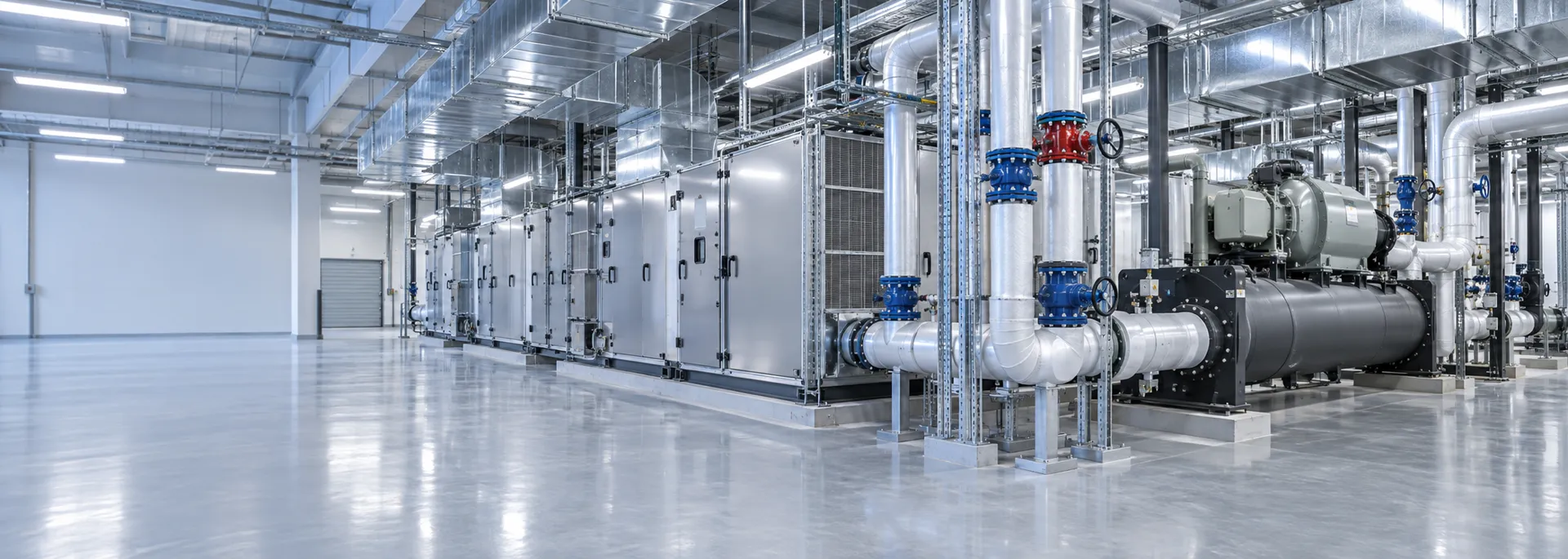
HVAC
HVAC (Air Conditioning · Refrigeration)
OverviewHVAC (Air Conditioning · Refrigeration)
Overview
- Environmental HVAC systems
- HVAC systems
- Cleanroom systems
- Air conditioning and cooling systems
AHU automation in cleanroom processes precisely manages cleanliness, temperature, humidity and differential pressure to ensure production consistency and quality.
Scope of WorkWhat we deliver
Scope of work
 01
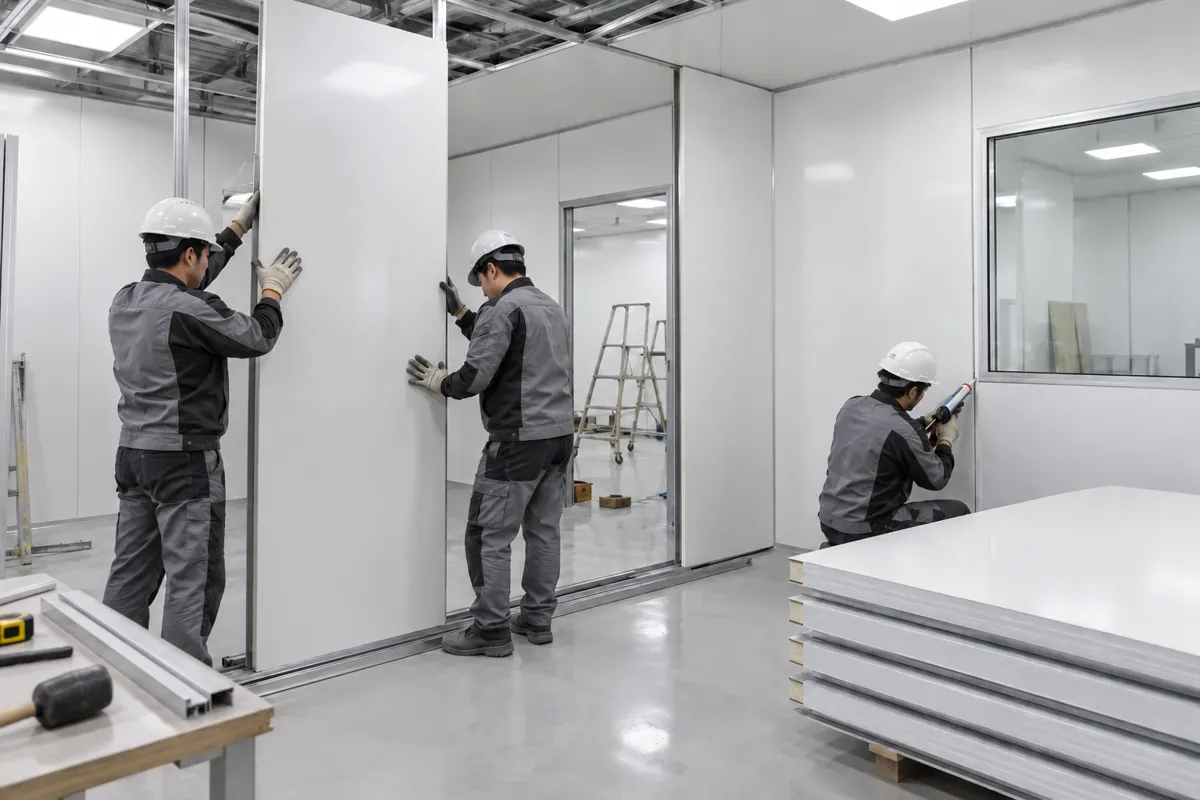
Panel construction
Panel construction is a key process for ensuring cleanliness, airtightness, hygiene and durability in cleanroom and GMP facilities.
 02
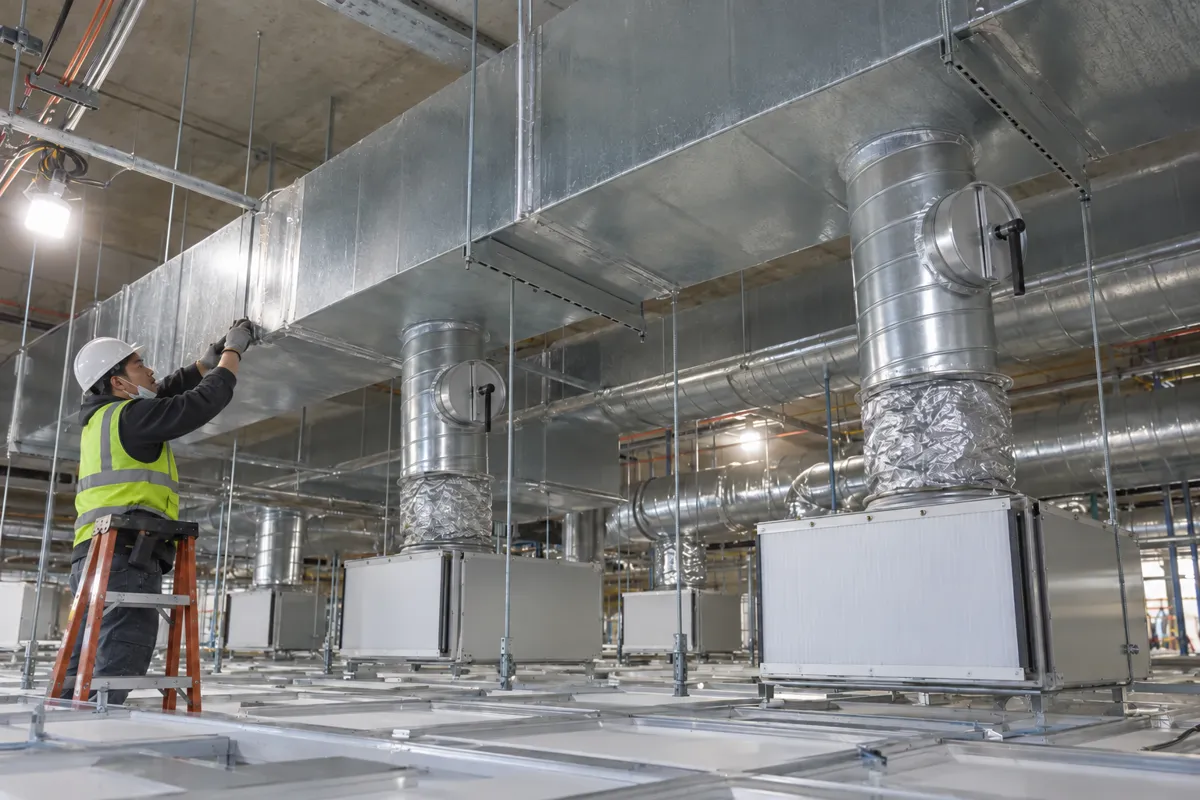
Ductwork
Ductwork is a key installation process for ensuring cleanliness, airtightness, hygiene and durability in cleanroom and GMP environments.
 03
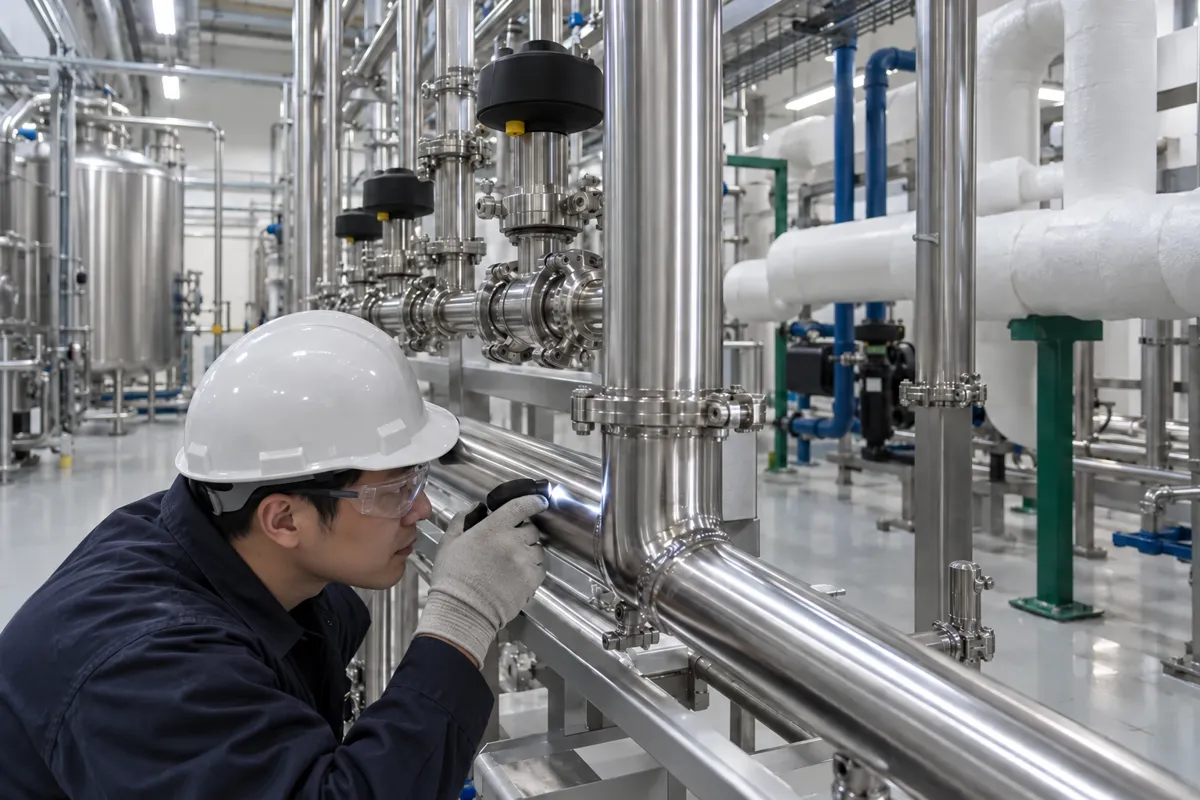
Piping
Piping is a key installation process for ensuring cleanliness, airtightness, hygiene and durability in cleanroom processes.
 04
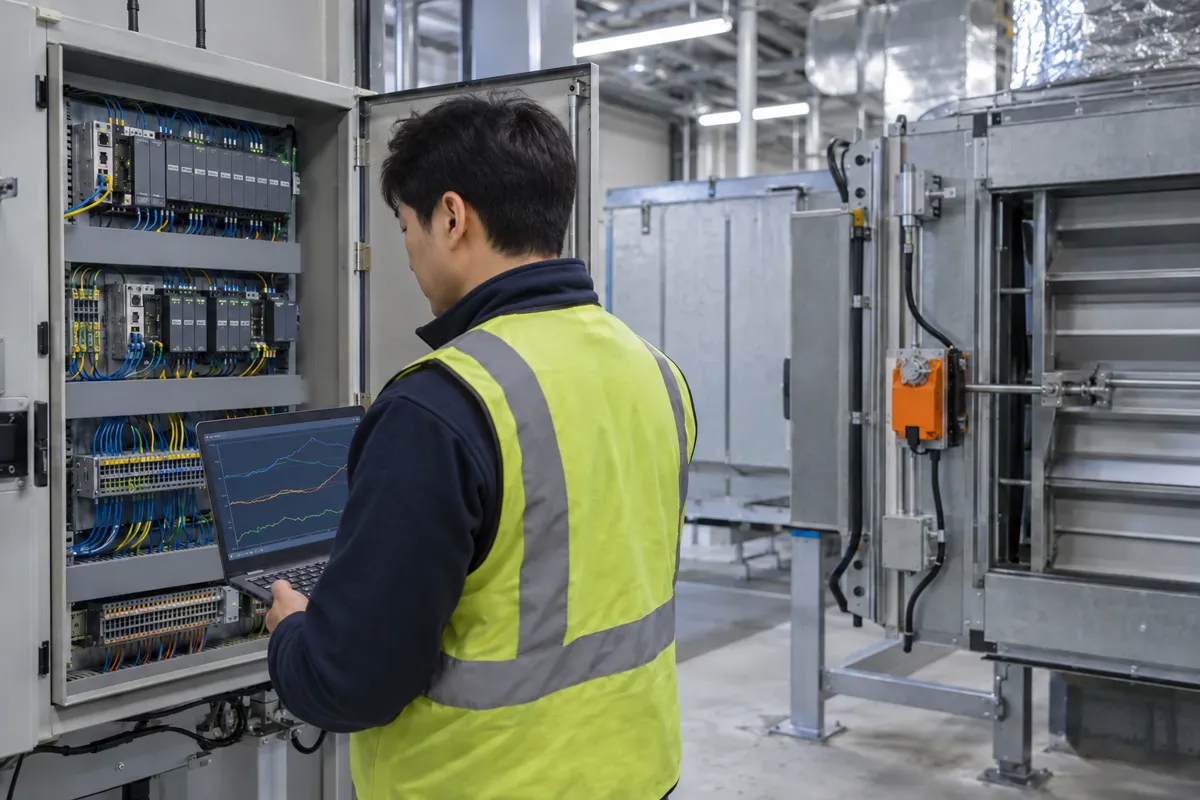
Automatic controls
AHU automation in cleanroom processes precisely manages cleanliness, temperature, humidity and differential pressure to ensure production consistency and quality.
Whole HVAC system flowWhole HVAC system flow
Whole HVAC system flow
An HVAC plant is three systems working together: air, chilled water and steam. The picture shows where each piece of equipment sits, and the flow diagram shows which way the air, water and steam move.
Where each piece of equipment sits (press a number for its role)

Equipment list (numbers match the picture)
Air system
- 01Outdoor air louver
Intake for outdoor air; keeps rain and coarse debris out of the duct.
- 02Filter (pre / medium)
Removes dust from the outdoor air in stages to protect the coils and the room.
- 03Air handling unit (AHU)
The central unit whose casing holds the filter, coils, humidifier and fan that condition the air.
- 04Cooling coil
Cools and dehumidifies the air with chilled water from the chiller.
- 05Heating coil
Heats the air with steam to the set temperature.
- 06Humidifier
Adds steam to the air to hold the room humidity in dry seasons.
- 07Supply fan
Pushes the conditioned air into the supply duct.
- 08Fire/smoke damper (supply)
Closes the supply duct in a fire to stop flames and smoke from spreading.
- 09HEPA diffusers
Deliver HEPA-filtered air evenly into the room from the ceiling.
- 10Cleanroom
The space whose temperature, humidity, pressure and cleanliness are controlled.
- 11Return / exhaust fan
Draws air out of the room to return part of it and exhaust the rest.
- 12Fire/smoke damper (exhaust)
Does the same job on the exhaust duct.
- 13Exhaust louver
Outlet that discharges the exhaust air outside the building.
Chilled-water system
- 14Cooling tower
Rejects the chiller's heat outdoors through the condenser water.
- 15Condenser-water pump
Circulates condenser water between the tower and the chiller.
- 16Chiller
Produces the chilled water for the AHU cooling coils.
- 17Chilled-water pump
Circulates chilled water through the supply header and the coils.
- 18Chilled-water supply header
Manifold that distributes chilled water to each AHU.
- 19Chilled-water return header
Collects the water returning from the coils and sends it back to the chiller.
- 20Differential pressure valve
Holds a constant pressure difference between the supply and return headers.
Steam system
- 21Boiler
Generates the steam used for heating and humidification.
- 22Steam header
Manifold that distributes steam to each point of use.
- 23Pressure reducing valve
Reduces the steam pressure to what the coils and humidifier need.
- 24Condensate tank
Collects the condensate that comes back after the steam has given up its heat.
- 25Boiler feed pump
Returns the collected condensate to the boiler.
Flow diagram (direction of air, chilled water, condenser water, steam and condensate)
Work sequence
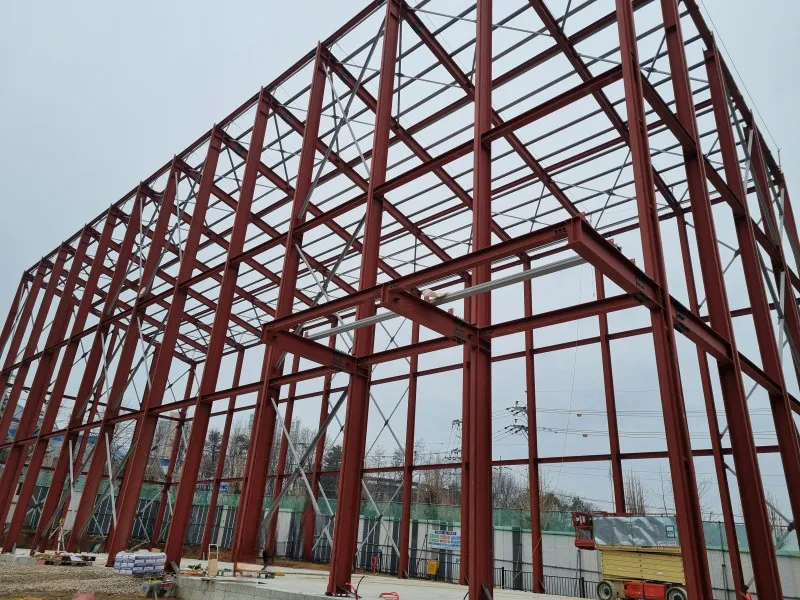 01Building
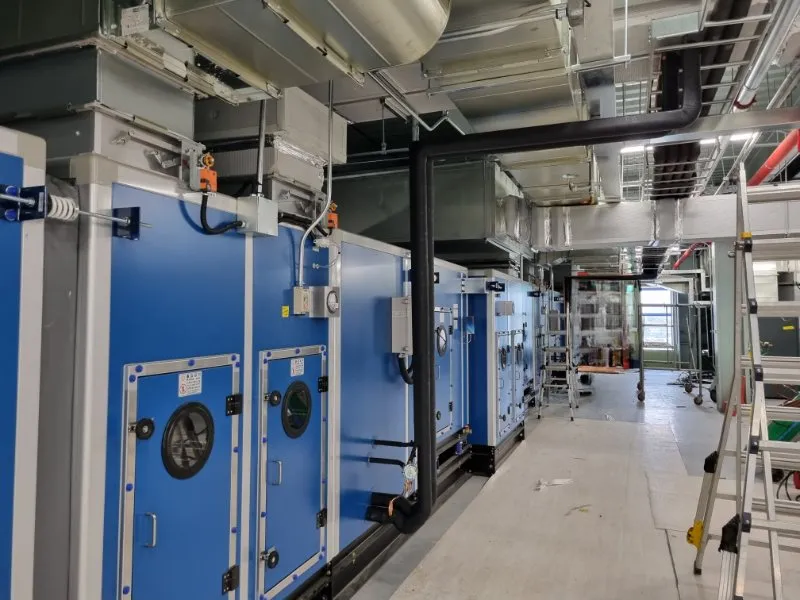 02Equipment installation
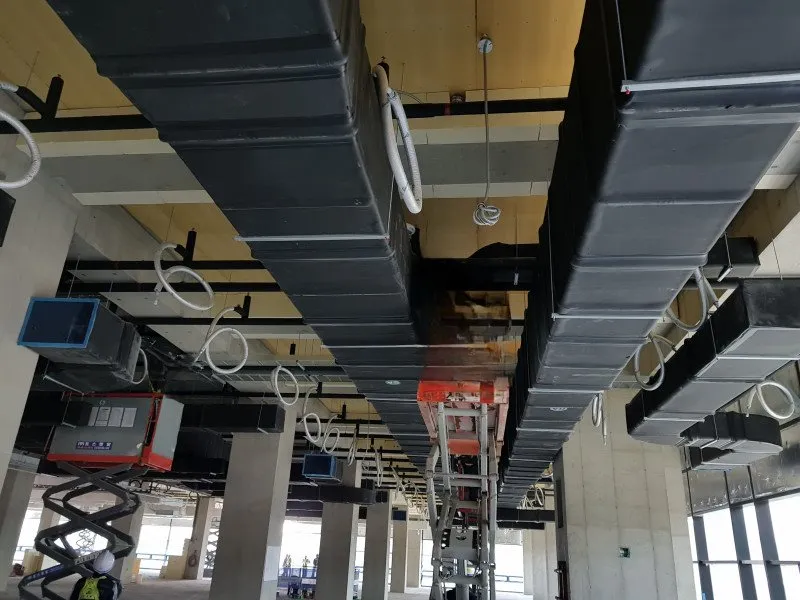 03Piping and ductwork
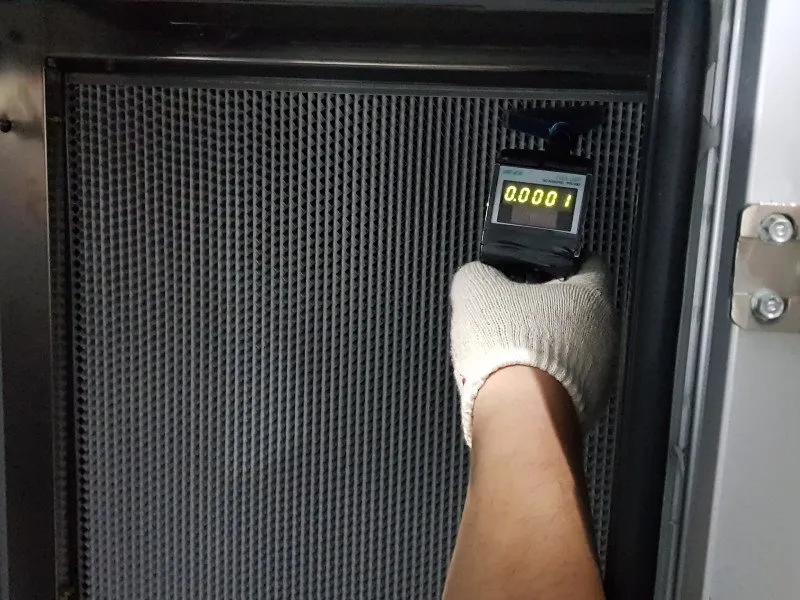 04DOP test
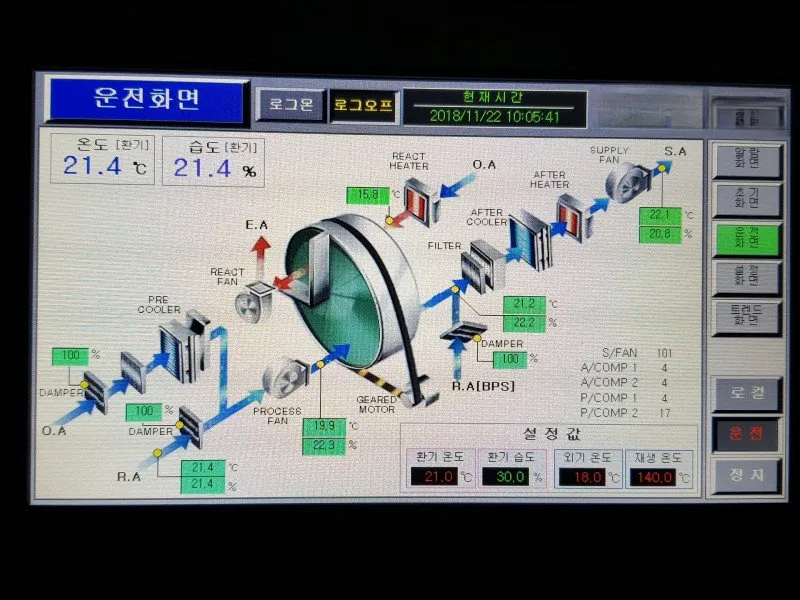 05HVAC monitoring
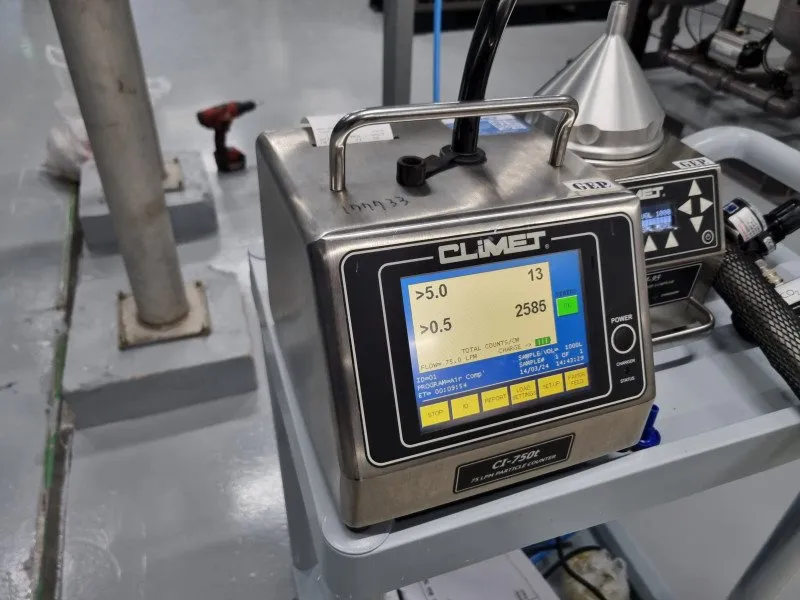 06Pressure and particle monitoring
Photographs from SAMYOUNG ENG sites.
View as table
| Equipment | System | Role |
|---|---|---|
| Outdoor air louver | Air system | Intake for outdoor air; keeps rain and coarse debris out of the duct. |
| Filter (pre / medium) | Air system | Removes dust from the outdoor air in stages to protect the coils and the room. |
| Air handling unit (AHU) | Air system | The central unit whose casing holds the filter, coils, humidifier and fan that condition the air. |
| Cooling coil | Air system | Cools and dehumidifies the air with chilled water from the chiller. |
| Heating coil | Air system | Heats the air with steam to the set temperature. |
| Humidifier | Air system | Adds steam to the air to hold the room humidity in dry seasons. |
| Supply fan | Air system | Pushes the conditioned air into the supply duct. |
| Fire/smoke damper (supply) | Air system | Closes the supply duct in a fire to stop flames and smoke from spreading. |
| HEPA diffusers | Air system | Deliver HEPA-filtered air evenly into the room from the ceiling. |
| Cleanroom | Air system | The space whose temperature, humidity, pressure and cleanliness are controlled. |
| Return / exhaust fan | Air system | Draws air out of the room to return part of it and exhaust the rest. |
| Fire/smoke damper (exhaust) | Air system | Does the same job on the exhaust duct. |
| Exhaust louver | Air system | Outlet that discharges the exhaust air outside the building. |
| Cooling tower | Chilled-water system | Rejects the chiller's heat outdoors through the condenser water. |
| Condenser-water pump | Chilled-water system | Circulates condenser water between the tower and the chiller. |
| Chiller | Chilled-water system | Produces the chilled water for the AHU cooling coils. |
| Chilled-water pump | Chilled-water system | Circulates chilled water through the supply header and the coils. |
| Chilled-water supply header | Chilled-water system | Manifold that distributes chilled water to each AHU. |
| Chilled-water return header | Chilled-water system | Collects the water returning from the coils and sends it back to the chiller. |
| Differential pressure valve | Chilled-water system | Holds a constant pressure difference between the supply and return headers. |
| Boiler | Steam system | Generates the steam used for heating and humidification. |
| Steam header | Steam system | Manifold that distributes steam to each point of use. |
| Pressure reducing valve | Steam system | Reduces the steam pressure to what the coils and humidifier need. |
| Condensate tank | Steam system | Collects the condensate that comes back after the steam has given up its heat. |
| Boiler feed pump | Steam system | Returns the collected condensate to the boiler. |
Panel constructionPanel construction
Panel construction
Panel construction is a key process for ensuring cleanliness, airtightness, hygiene and durability in cleanroom and GMP facilities.
Panels form walls, ceilings and partitions, block external contaminants and maintain a stable internal environment.
Modular panels are assembled to fit the site, improving construction efficiency and ease of maintenance.
Panel materials and features
- 01Urethane panels
- Insulation
- Airtight
- Lightweight
- Economical
- Easy to install
ApplicationsVarious industries
Urethane foam between two steel sheets; excellent insulation, airtightness and low weight; widely used, easy and economical to install
- 02EPS panels
- Insulation
- Flame-retardant
- Economical
ApplicationsWalls
Flame-retardant EPS filling; economical with good insulation; mainly used for cost-saving walls
- 03Glass-wool panels
- Non-combustible
- Noise reduction
ApplicationsPharmaceutical, Biological, Fire-risk environments
Glass-fibre filling; excellent sound insulation, fire protection and non-combustibility; suited to pharmaceutical and biological facilities with fire risks
- 04Aluminium panels
- Lightweight
- Corrosion-resistant
- Clean
- Easy maintenance
ApplicationsSemiconductors and electronics
Aluminium skins; light, corrosion-resistant and clean; low dust generation and easy maintenance; suited to electronics and semiconductors
- 05Stainless-steel panels
- Durable
- Hygienic
- Chemical-resistant
ApplicationsPharmaceutical, Biological, Medical
Stainless-steel skins; durable, chemical-resistant and hygienic; resist bacterial growth and are easy to disinfect; used in pharmaceutical, biological and medical facilities
- 06Mineral wool/honeycomb
- Non-combustible
- Chemical-resistant
- Moisture-resistant
ApplicationsHigh-cleanliness environments
Mineral wool or aluminium honeycomb filling; excellent non-combustibility, moisture and chemical resistance; used where high cleanliness is required
Panel thickness
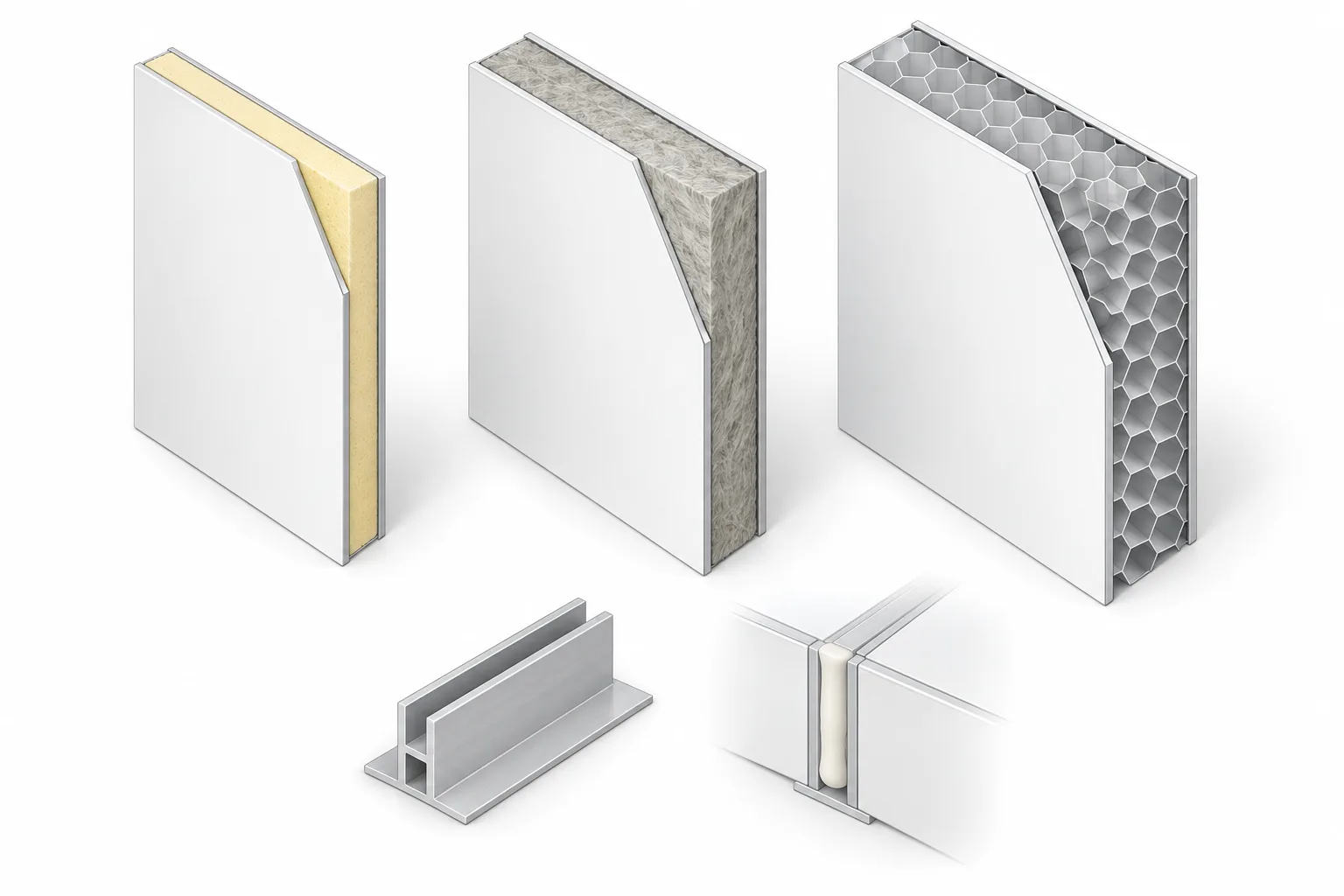
- 50T Panel thickness
Thickness and specifications: panels commonly use 50T, 75T or 100T thickness, with silicon-zinc, antistatic colour-coated or stainless-steel skins.
- 75T Panel thickness
Thickness and specifications: panels commonly use 50T, 75T or 100T thickness, with silicon-zinc, antistatic colour-coated or stainless-steel skins.
- 100T Panel thickness
Thickness and specifications: panels commonly use 50T, 75T or 100T thickness, with silicon-zinc, antistatic colour-coated or stainless-steel skins.
- Skin
- Core
View as table
| Material | Main features and uses |
|---|---|
| Urethane panels | Urethane foam between two steel sheets; excellent insulation, airtightness and low weight; widely used, easy and economical to install |
| EPS panels | Flame-retardant EPS filling; economical with good insulation; mainly used for cost-saving walls |
| Glass-wool panels | Glass-fibre filling; excellent sound insulation, fire protection and non-combustibility; suited to pharmaceutical and biological facilities with fire risks |
| Aluminium panels | Aluminium skins; light, corrosion-resistant and clean; low dust generation and easy maintenance; suited to electronics and semiconductors |
| Stainless-steel panels | Stainless-steel skins; durable, chemical-resistant and hygienic; resist bacterial growth and are easy to disinfect; used in pharmaceutical, biological and medical facilities |
| Mineral wool/honeycomb | Mineral wool or aluminium honeycomb filling; excellent non-combustibility, moisture and chemical resistance; used where high cleanliness is required |
- Installation: assemble modular panels for walls, ceilings and partitions; seal panel joints and moulding connections with bio-silicone or similar materials for airtightness and hygiene.
- Accessories: aluminium mouldings, angles, bases, threaded rods, rivets, colour screws and bio-silicone.
- Thickness and specifications: panels commonly use 50T, 75T or 100T thickness, with silicon-zinc, antistatic colour-coated or stainless-steel skins.
DuctworkDuctwork
Ductwork
Ductwork is a key installation process for ensuring cleanliness, airtightness, hygiene and durability in cleanroom and GMP environments.
As part of HVAC systems, ducts block external ingress and circulate, purify and exhaust indoor air to maintain a clean environment.
Design and construction consider airflow, filtration efficiency, noise and maintenance together and follow applicable regulations and standards.
Duct materials and features
- 01Galvanised steel (GI)
- Corrosion-resistant
- Economical
- Workable
- Standard material
ApplicationsHVAC, Cleanroom supply/exhaust
Widely used, corrosion-resistant, workable and economical; standard for general HVAC and cleanroom supply/exhaust
- 02Stainless steel (STS304)
- Corrosion-resistant
- Durable
- Hygienic
ApplicationsPharmaceutical, Biological, Food, GMP environments
Excellent corrosion resistance, durability and hygiene; mainly used in pharmaceutical, biological and food GMP environments
- 03Aluminium
- Lightweight
- Corrosion-resistant
- Clean
- Easy maintenance
ApplicationsSemiconductors and electronics, High-cleanliness environments
Light, corrosion-resistant and clean, with easy maintenance; suited to semiconductor and electronics environments
- 04PVC/FRP
- Chemical-resistant
- Moisture-resistant
ApplicationsChemicals, Special exhaust, Corrosive environments
Chemical- and moisture-resistant; used for chemical manufacturing, corrosive environments and special exhaust
- 05Fabric ducts
- Lightweight
- Noise reduction
- Easy to install and move
ApplicationsAuxiliary supply
Light, easy to install and move, noise-reducing; used for some auxiliary air supplies
- 06Flexible ducts
ApplicationsEquipment connections, Confined spaces
Made from aluminium foil, glass cloth and similar materials; used at equipment connections and in confined spaces
View as table
| Material | Main features and uses |
|---|---|
| Galvanised steel (GI) | Widely used, corrosion-resistant, workable and economical; standard for general HVAC and cleanroom supply/exhaust |
| Stainless steel (STS304) | Excellent corrosion resistance, durability and hygiene; mainly used in pharmaceutical, biological and food GMP environments |
| Aluminium | Light, corrosion-resistant and clean, with easy maintenance; suited to semiconductor and electronics environments |
| PVC/FRP | Chemical- and moisture-resistant; used for chemical manufacturing, corrosive environments and special exhaust |
| Fabric ducts | Light, easy to install and move, noise-reducing; used for some auxiliary air supplies |
| Flexible ducts | Made from aluminium foil, glass cloth and similar materials; used at equipment connections and in confined spaces |
- Installation: adjust and inspect each part to maintain airtightness and cleanliness.
- Connections: airtight silicone or gasket seals prevent leakage between ducts and at HEPA/ULPA filters, diffusers and other equipment.
- Insulation and soundproofing: use thermal insulation and acoustic materials as needed to prevent condensation and noise.
PipingPiping
Piping
Piping is a key installation process for ensuring cleanliness, airtightness, hygiene and durability in cleanroom processes.
Piping systems provide reliable, contamination-controlled supplies for HVAC, water, drainage, steam, chilled/hot water, gas and compressed air.
All piping must minimise contaminant generation and allow easy maintenance and verification.
Piping materials and features
- 01Stainless steel
- Corrosion-resistant
- Durable
- Hygienic
ApplicationsPharmaceutical, Biological, Food, GMP environments
Excellent corrosion resistance, durability and hygiene; mainly used in pharmaceutical, biological and food GMP environments
- 02PVC/CPVC
- Chemical-resistant
- Moisture-resistant
ApplicationsChemicals, Drainage, Corrosive environments
Chemical- and moisture-resistant; suited to chemical transfer, drainage and corrosive environments
- 03PFA/PP
- Chemical-resistant
- Heat-resistant
- High purity
ApplicationsUltrapure water and special gases
High purity, chemical and heat resistance; used for ultrapure water and special gas transfer
- 04Copper/aluminium
- Corrosion-resistant
- Workable
ApplicationsHVAC, Chilled/hot water, Gas piping
Used for chilled/hot water, HVAC and some gas piping; good workability and corrosion resistance
View as table
| Material | Main features and uses |
|---|---|
| Stainless steel | Excellent corrosion resistance, durability and hygiene; mainly used in pharmaceutical, biological and food GMP environments |
| PVC/CPVC | Chemical- and moisture-resistant; suited to chemical transfer, drainage and corrosive environments |
| PFA/PP | High purity, chemical and heat resistance; used for ultrapure water and special gas transfer |
| Copper/aluminium | Used for chilled/hot water, HVAC and some gas piping; good workability and corrosion resistance |
- Installation: adjust and inspect each part to maintain airtightness and cleanliness.
- Connections: airtight silicone or gasket seals prevent leakage between pipes and at valves, pumps, filters and other equipment.
- Insulation and soundproofing: apply thermal and acoustic materials as needed to prevent condensation, heat loss and noise.
- Painting and corrosion protection: apply anticorrosive and exterior coatings to metal pipes to prevent corrosion and improve durability.
Automatic controlsAutomatic controls
Automatic controls
AHU automation in cleanroom processes precisely manages cleanliness, temperature, humidity and differential pressure to ensure production consistency and quality.
Automatic control systems monitor and control AHU operation in real time and are designed and installed to maintain GMP-compliant environments.
Automatic control functions and features
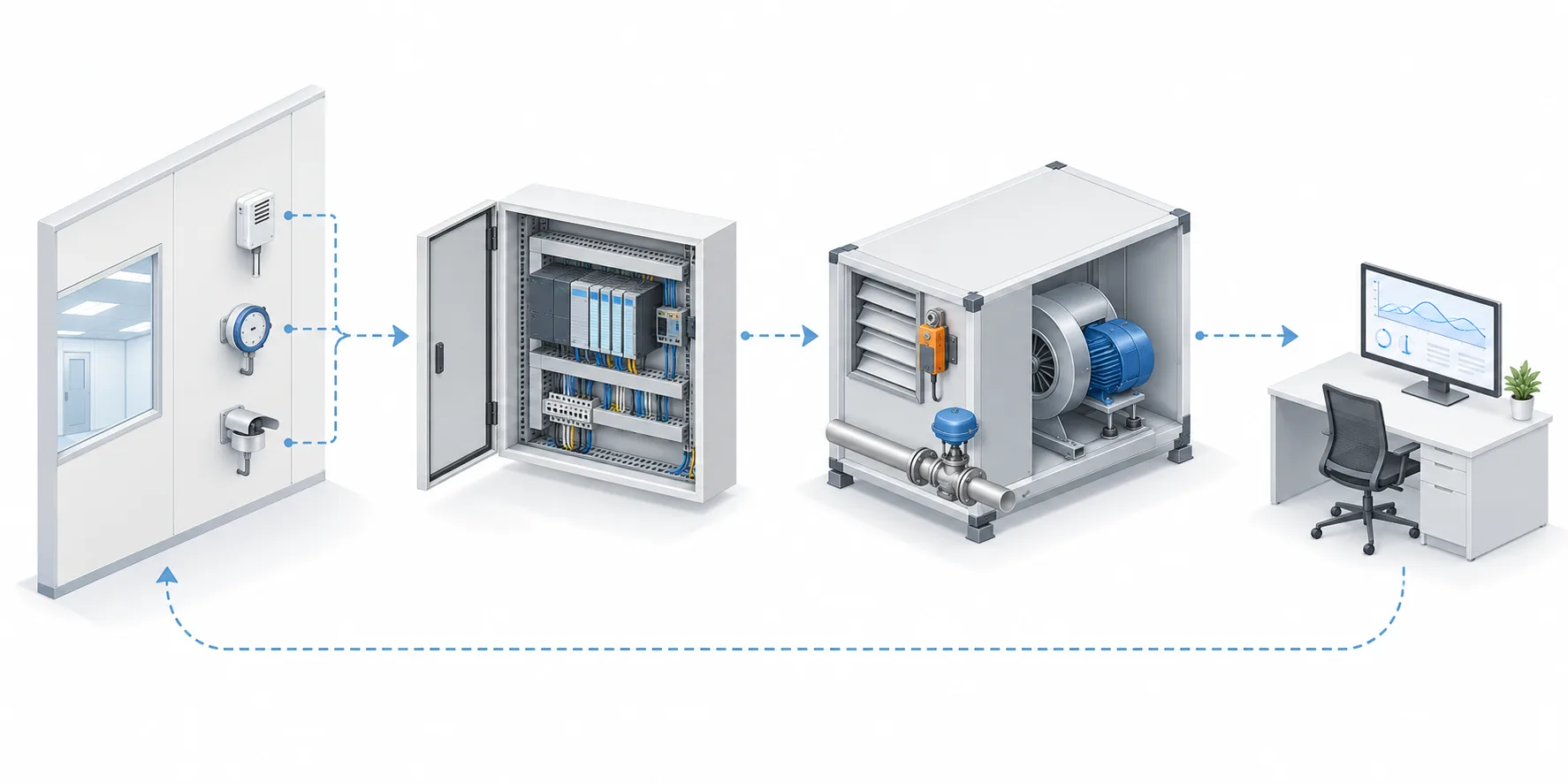
What each part does
- 01Sensors
Real-time sensing of temperature, humidity, differential pressure and airflow
- 02Controllers (PLC, DDC)
Analyse sensor signals to automatically control AHU fans, dampers, valves, heaters and coolers
- 03Actuators
Control the operation of AHU dampers, valves, fans and other key equipment
- 04Monitoring systems
Monitor and record AHU operation and environmental variables in real time, with alarms for abnormalities
Installation flow
- 01Installation
systematically arrange and install sensors, controllers, actuators and wiring
- 02Environmental control
automatically control and record temperature, humidity and differential pressure in real time
- 03Central monitoring
view AHU operation and environmental variables in real time and manage their histories
- 04Commissioning and verification
check control performance under actual operating conditions and perform GMP-compliant verification
View as table
| Component | Main functions and roles |
|---|---|
| Sensors | Real-time sensing of temperature, humidity, differential pressure and airflow |
| Controllers (PLC, DDC) | Analyse sensor signals to automatically control AHU fans, dampers, valves, heaters and coolers |
| Actuators | Control the operation of AHU dampers, valves, fans and other key equipment |
| Monitoring systems | Monitor and record AHU operation and environmental variables in real time, with alarms for abnormalities |
Other business areas
Contact Us
Your next project starts here.
Talk to us about the right engineering approach for your facility, scale and schedule.