SYENG
SYENG

Cleanroom

Cleanrooms (Semiconductor · Laboratory)

OverviewCleanrooms (Semiconductor · Laboratory)

Overview

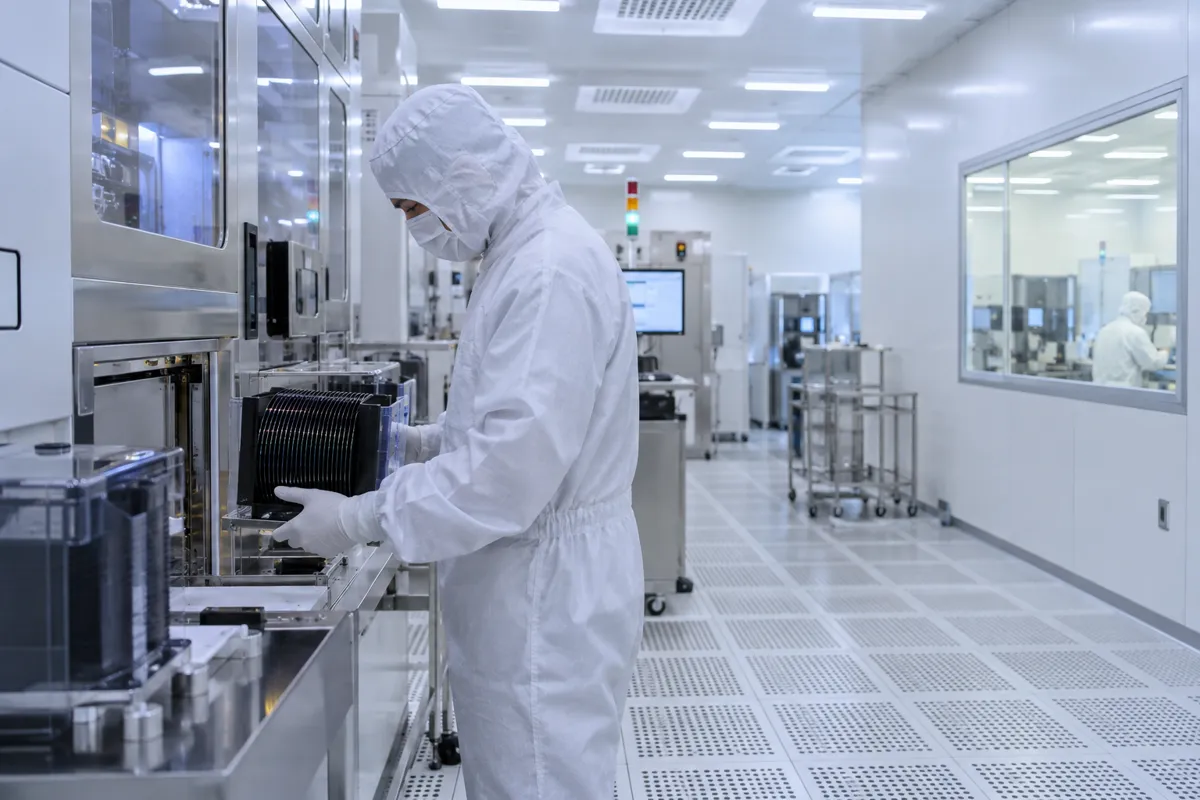
  • Semiconductors, displays, precision electronics, machinery, aviation and automotive parts
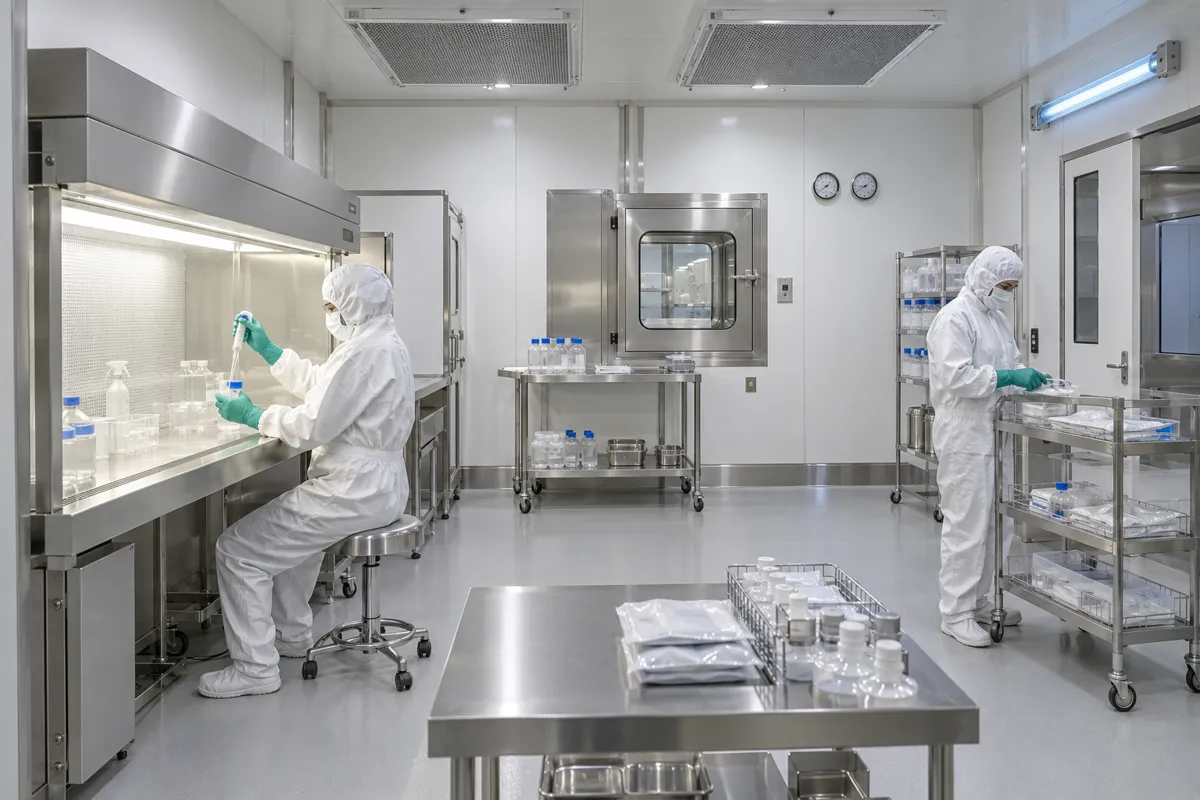
  • Pharmaceuticals, food, hospitals and laboratories

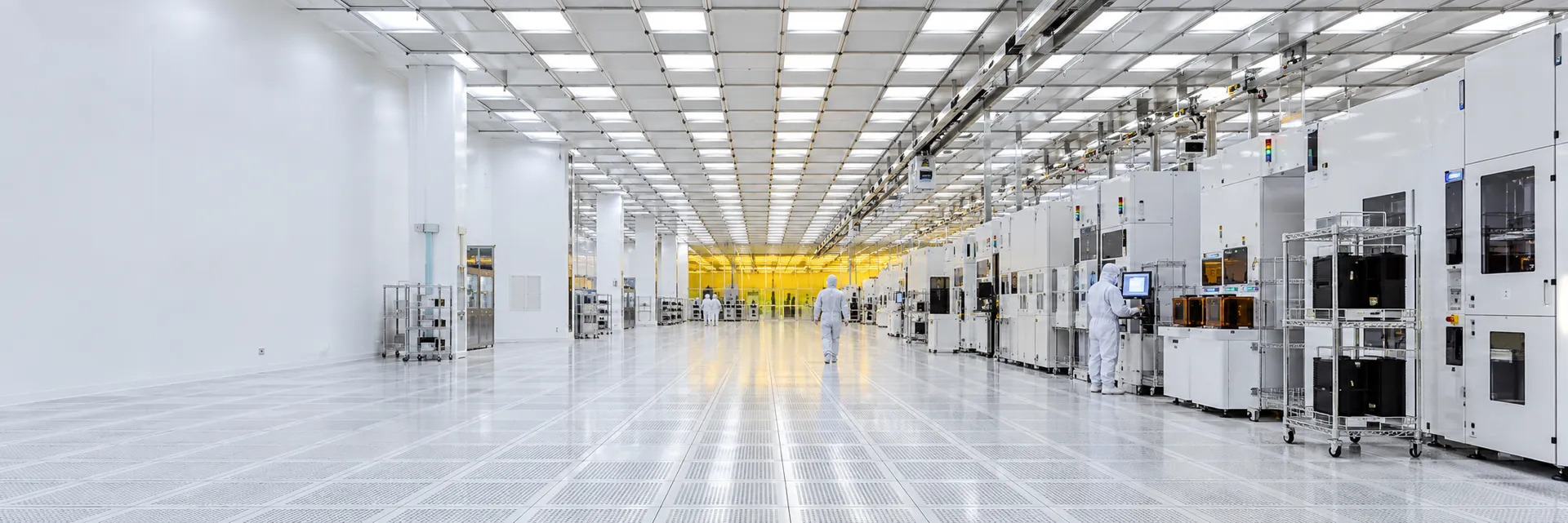
Industrial cleanrooms strictly control airborne particle concentrations to improve product quality and reliability. Biological cleanrooms strictly control temperature, humidity and pressure to defined standards while effectively managing airborne microorganisms and biological particles.

Scope of WorkWhat we deliver

Scope of work

  • ICR cleanrooms
    01

    ICR cleanrooms

    Industrial cleanrooms strictly control airborne particle concentrations to improve product quality and reliability.

  • BCR cleanrooms
    02

    BCR cleanrooms

    Biological cleanrooms strictly control temperature, humidity and pressure to defined standards while effectively managing airborne microorganisms and biological particles.

ICR cleanroomsICR cleanrooms

ICR cleanrooms

Industrial cleanrooms strictly control airborne particle concentrations to improve product quality and reliability.

Temperature, humidity and pressure are also managed, for use in advanced industries including electronics, semiconductors, precision machinery and aviation.

ICR features and management criteria

  • Cleanliness grades

    Class 1–9 under ISO 14644-1 (the former US Federal Standard FED-STD-209E was withdrawn in 2001; e.g. Class 100 ≈ ISO 5), principally based on counts of 0.1–5µm particles

  • Particle control

    High-performance filtration such as HEPA/ULPA removes particles, with air circulation and ventilation systems

  • Environmental control

    Precise control and monitoring of temperature, humidity and pressure

  • Structures/systems

    Contamination-prevention structures with smooth walls, ceilings and floors, plus air showers, pass boxes and other barriers

  • Industries

    Semiconductors, displays, precision electronics, machinery, aviation and automotive parts

Cleanliness classes (ISO 14644-1)

  • ISO classClass 1Typical uses (reference): Ultra-precision semiconductors
    • ≥0.1µm particles/m³10
    • ≥0.5µm particles/m³-
    • ≥5µm particles/m³-
  • ISO classClass 5Typical uses (reference): Semiconductors, precision electronics
    • ≥0.1µm particles/m³100000
    • ≥0.5µm particles/m³3520
    • ≥5µm particles/m³-
  • ISO classClass 7Typical uses (reference): General electronics, machinery
    • ≥0.1µm particles/m³-
    • ≥0.5µm particles/m³352000
    • ≥5µm particles/m³2930
  • ISO classClass 8Typical uses (reference): Packaging, warehouses
    • ≥0.1µm particles/m³-
    • ≥0.5µm particles/m³3520000
    • ≥5µm particles/m³29300

Bar lengths use a log scale.

View as table
ICR features and management criteria
CategoryDetails
Cleanliness gradesClass 1–9 under ISO 14644-1 (the former US Federal Standard FED-STD-209E was withdrawn in 2001; e.g. Class 100 ≈ ISO 5), principally based on counts of 0.1–5µm particles
Particle controlHigh-performance filtration such as HEPA/ULPA removes particles, with air circulation and ventilation systems
Environmental controlPrecise control and monitoring of temperature, humidity and pressure
Structures/systemsContamination-prevention structures with smooth walls, ceilings and floors, plus air showers, pass boxes and other barriers
IndustriesSemiconductors, displays, precision electronics, machinery, aviation and automotive parts
Cleanliness classes (ISO 14644-1)
ISO class≥0.1µm particles/m³≥0.5µm particles/m³≥5µm particles/m³Typical uses (reference)
Class 110--Ultra-precision semiconductors
Class 51000003520-Semiconductors, precision electronics
Class 7-3520002930General electronics, machinery
Class 8-352000029300Packaging, warehouses
  • A lower class number means a higher level of cleanliness
  • Counts are cumulative maximum concentrations at or above the size shown. '-' marks sizes for which the standard sets no class limit (Class 1 at ≥0.5 and ≥5µm and Class 5 at ≥5µm because of sampling and statistical limits at low concentrations; Class 7 and 8 at ≥0.1µm because concentrations are too high).
  • Typical uses are for reference only; ISO 14644-1 does not assign classes to industries.
  • Source: ISO 14644-1:2015, Table 1 (clause 4.3).

BCR cleanroomsBCR cleanrooms

BCR cleanrooms

Biological cleanrooms strictly control temperature, humidity and pressure to defined standards while effectively managing airborne microorganisms and biological particles.

BCRs focus on microbial as well as particle contamination, mainly in pharmaceuticals, food, hospitals and laboratories where aseptic environments are essential.

Grades A–D apply to sterile medicinal product manufacturing (see the GMP cleanroom grade table). Cleanliness requirements for food, hospital and laboratory facilities follow each field's own rules and process risks.

BCR features and management criteria

  • Microbial control

    HEPA/ULPA filters, UV/sterilisation systems and other equipment control microorganisms and biological particles

  • Environmental control

    Precise temperature, humidity and pressure control, rapid contaminant removal, and vertical laminar/turbulent airflow

  • Structures and finishes

    Contamination- and moisture-resistant materials such as epoxy and stainless steel, rounded corners and airtight joints

  • Contamination barriers

    Air showers and pass boxes at entrances, and access control systems

View as table
BCR features and management criteria
CategoryDetails
Microbial controlHEPA/ULPA filters, UV/sterilisation systems and other equipment control microorganisms and biological particles
Environmental controlPrecise temperature, humidity and pressure control, rapid contaminant removal, and vertical laminar/turbulent airflow
Structures and finishesContamination- and moisture-resistant materials such as epoxy and stainless steel, rounded corners and airtight joints
Contamination barriersAir showers and pass boxes at entrances, and access control systems

Five topics for planning a cleanroom or GMP facility, drawn from official standards and general engineering considerations. Every figure carries its source, and provisions that apply to the facilities in scope (Requirement) are separated from values their source labels as reference values (Guidance). Site-specific conditions are confirmed through a quotation inquiry.

Requirement
A provision that applies to the facilities named in its scope
Guidance
A value its source labels as a reference or guidance value

Floor materials compared

Cleanroom floors are chosen by performance, not by material name. The surface must be smooth, impervious and able to withstand repeated cleaning and disinfection without damage, and the material must shed few particles.

Whichever material is chosen, seams, coving, penetrations and repairs are assessed with it. Conductive, static-dissipative and merely anti-static are not the same performance, and ordinary epoxy or ordinary PVC is never assumed to be a conductive floor.

The matrix below summarises general engineering considerations when selecting floor materials. No regulation prescribes a particular material, and a manufacturer's suitability statement does not certify the finished room or process.

Floor material review matrix

  • Candidate
  • Conditional
  • Not suitable
  • Not established
  • Gray text = conditions and cautions
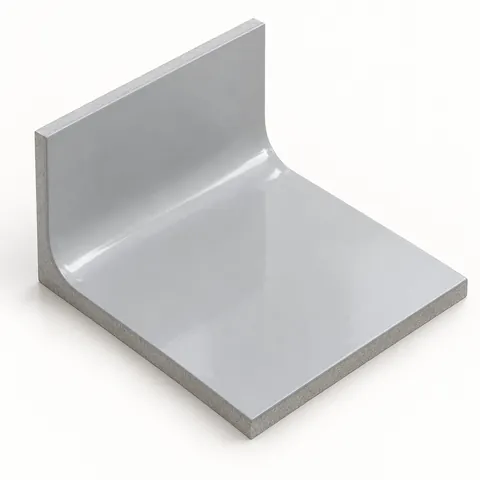
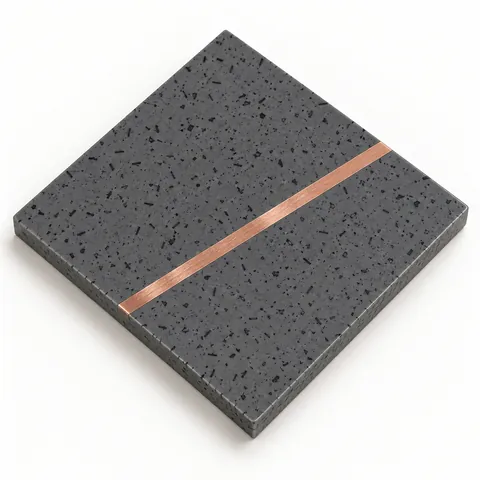
  • Ordinary epoxy: Illustrative material sample

    Ordinary epoxy

    Continuous finish · covingIllustrative material sample

    Pharmaceutical GMP

    Candidate

    Continuous finish with coving up the wall.

    Confirm compatibility with the actual disinfectants and thermal loads per product

    Semiconductor and electronics

    Not suitable

    Not suitable where the process needs an electrostatic-control floor.

    Assess particle and molecular emissions separately

    Food HACCP

    Conditional

    Apply after checking sanitation chemicals, wet slip risk, drainage and thermal shock
  • Conductive or static-dissipative epoxy: Illustrative material sample

    Conductive or static-dissipative epoxy

    Processes with an electrostatic risk · ESD-controlled areasIllustrative material sample

    Pharmaceutical GMP

    Conditional

    Only where an electrostatic risk justifies it; not mandatory for every GMP room

    Semiconductor and electronics

    Candidate

    Candidate for ESD-controlled areas.

    Test electrical and cleanliness performance separately against the approved specification

    Food HACCP

    Conditional

    Only where an identified electrostatic risk exists.

    Conductivity does not replace hygiene performance
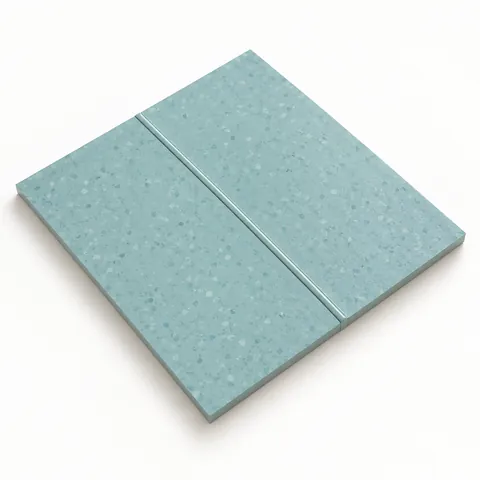
  • Welded PVC sheet: Illustrative material sample

    Welded PVC sheet

    Welded seams · covingIllustrative material sample

    Pharmaceutical GMP

    Candidate

    Welded seams and coving are available.

    Check seam condition, service loads and disinfectant compatibility

    Semiconductor and electronics

    Candidate

    Conductive or dissipative sheet variants are candidates.

    Ordinary sheet is not an ESD substitute

    Food HACCP

    Conditional

    Assess wet-service seams, chemicals and thermal loading.

    No universal suitability is assumed
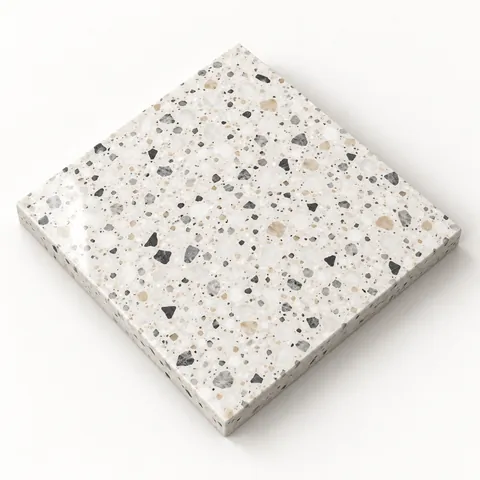
  • Resinous terrazzo: Illustrative material sample

    Resinous terrazzo

    Circulation and high-traffic areasIllustrative material sample

    Pharmaceutical GMP

    Conditional

    Consider for circulation and high-traffic areas.

    Not a default floor for critical aseptic rooms

    Semiconductor and electronics

    Not established

    No general cleanroom or ESD suitability has been established

    Food HACCP

    Conditional

    Assess wet slip risk and cleanability.

    No blanket recommendation

  • Drainage: a food-plant drainage detail is never transferred into a sterile pharmaceutical area as is. EU GMP Annex 1 (2022) Section 4.9 keeps sinks and drains out of Grade A and B.
  • Food: impervious, non-toxic, cleanable floors with appropriate drainage follow Codex General Principles of Food Hygiene Section 9.1.3. The Korean HACCP evaluation criteria are the Standards for the Certification of Food and Livestock Product Safety Management (MFDS notice); their detailed items are confirmed separately.

Differential pressure, temperature and humidity

Pressure differentials, temperature and humidity are specified for the process, product, cleanliness grade and personnel conditions. For sterile pharmaceutical areas the pressure and airflow strategy follows the applicable GMP framework, with guidance values kept distinct from validated acceptance criteria.

Pressure direction is a protection strategy, not just a number. For product protection the room is kept positive toward the lower grade; where pathogenic or highly toxic material must be contained, airlocks or other containment measures are justified separately.

In the table, Requirement marks a provision that applies to the facilities named in its scope and Guidance marks a value its source labels as a reference or guidance value. There is no temperature or humidity pair common to every industry.

  • Requirement

    Differential between adjacent rooms of different grades

    Positive pressure and airflow toward the lower grade. Critical differentials are continuously monitored and recorded, with alarms and actions on excursions

    Sterile medicinal product facilities

    Sources: EU GMP Annex 1 (2022) Sections 4.14, 4.16 · MFDS Regulation on Pharmaceutical Manufacturing and Quality Control, Annex 1 (Sterile medicinal products)

  • Guidance

    Differential pressure reference value

    Minimum 10 Pa

    EU GMP Annex 1 (2022) Section 4.14 labels it a ‘guidance value’; the MFDS annex a ‘reference value’. The 10–15 Pa of the 2008 Annex 1 is not the revised wording

    Sources: EU GMP Annex 1 (2022) Section 4.14 · MFDS Regulation on Pharmaceutical Manufacturing and Quality Control, Annex 1 (Sterile medicinal products)

  • Guidance

    Non-sterile pharmaceutical HVAC pressure

    5–20 Pa, with 15 Pa commonly used

    WHO design guidance for non-sterile pharmaceutical HVAC; not a sterile-manufacturing requirement

    Sources: WHO TRS 961 Annex 5 (Supplementary guidelines on GMP for HVAC for non-sterile pharmaceutical products) Section 4.7.4

  • Requirement

    Temperature and relative humidity (pharmaceutical)

    Controlled within ranges justified for product, process and personnel, and verified

    Sterile medicinal product facilities. No universal pair; the justified ranges are verified

    Sources: EU GMP Annex 1 (2022) Section 9.6

  • Guidance

    Relative humidity (semiconductor cleanrooms)

    Set to the product, process and equipment requirements; varies by process

    ASHRAE engineering reference for the described industry. Each industry and process sets its own value; no universal figure

    Sources: ASHRAE Handbook—HVAC Applications (2023), Chapter 19 Clean Spaces

  • Guidance

    Temperature (full-gowning areas)

    Set to operator comfort and gowning conditions

    ASHRAE comfort guidance for ISO Class 6 or cleaner spaces

    Sources: ASHRAE Handbook—HVAC Applications (2023), Chapter 19 Clean Spaces

  • A guidance value adopted in an approved project specification becomes that project's acceptance criterion; it is never presented as a statutory value for every facility.

Construction sequence, schedule and estimate factors

A cleanroom project starts with the user requirements and a design review: process, cleanliness, room use, people and material flows, pressure zoning, heat, moisture and exhaust loads, cleaning method, utilities and the scope of qualification. GMP projects verify the design against the URS in design qualification (DQ).

The sequence below is the usual flow; on site the trades overlap. The final ceiling is not closed until the ductwork, piping and electrical above it, and the access for inspection, are complete.

Duration and cost depend on the site, so no universal figures are published here. Tell us the factors below and we estimate them for your site.

Typical execution sequence

  1. 01Design and drawing coordination

    Fix the URS, cleanliness grades, flows and pressure zoning; design qualification (DQ)

  2. 02Partitions, panels and ceilings

    Modular panel assembly, airtight joints, door, window and penetration details

  3. 03HVAC, piping and electrical

    Supply, return and exhaust ducts and AHUs, utility piping, electrical and instrumentation, sensor and controller wiring.

    Ducts are sealed and cleaned before the filters go in

  4. 04Finishes, sealing and cleaning

    Floor finish and coving, silicone sealing, ceiling closure after the above-ceiling check, protection and cleaning of finished surfaces

  5. 05Commissioning (TAB) and qualification

    Air balancing and pressure/control checks, then performance tests and document handover.

    TAB alone is not GMP qualification

What drives the schedule and the estimate

  • Schedule

    Procurement, approvals and site conditions set the programme.

    No standard prescribes a build time.

    • Approvals and requirement changes
    • Equipment, panel and filter procurement
    • Substrate repair
    • Above-ceiling coordination
    • Utility tie-in dates
    • Shutdown windows
    • Finish curing
    • Cleaning, testing and document approval
  • Estimate

    Cost follows the performance specification, interfaces, operating constraints and scope boundaries, not floor area alone.

    • Target grade and room layout
    • Airtightness
    • Air volume and filtration
    • Temperature and humidity tolerance
    • Fresh air, exhaust and heat loads
    • Utility capacity
    • Chemical-resistant or ESD floors
    • Instrumentation and alarms
    • Segregation from live production
    • Qualification scope and documents

Sources

Renovation while the plant operates

Work in an operating plant starts with change control: the effect of the work on product quality, HVAC, process, utilities, qualification and regulatory status is assessed and approved, and the requalification scope and restart criteria are fixed before work begins.

The work zone is segregated from production, and after temporary partitions go up the existing pressure and airflow are checked again. A negative-pressure construction enclosure must never defeat the positive-pressure strategy protecting the production rooms.

We do not promise that every plant can keep producing through a renovation. Where product exposure, shared HVAC or dust risk cannot be controlled, the affected process may have to stop.

Checklist for work in an operating plant

  • 01
    Change control and impact assessment

    Assess and approve the effect on quality, HVAC, process, utilities, calibration, documents and qualification, and fix the requalification scope in advance.

    (EU GMP Annex 15 Section 11)

  • 02
    Segregation and routes

    Plan the work-zone boundary, the routes for people, materials and waste, and the HVAC and utility changeovers.

  • 03
    Temporary containment

    Sealed barriers with gaps closed, relative negative pressure with exhaust and filtration in the dusty zone, covered waste removal.

    (CDC healthcare construction guidance, applied as an engineering reference)

  • 04
    Protect production-room pressure

    Design so the construction enclosure's negative pressure does not defeat the graded positive pressure and airflow of production, and measure after installation.

    (EU GMP Annex 1 (2022) Section 4.14)

  • 05
    Work inside a cleanroom

    If the required cleanliness cannot be maintained, apply restricted access, clear work procedures and additional cleaning, disinfection and monitoring.

    (EU GMP Annex 1 (2022) Section 5.3)

  • 06
    Requalification after the change

    HVAC setting changes, airflow interruptions and final-filter replacement are assessed for significance and requalified.

    Under sterile GMP the maximum periodic requalification interval is 6 months for Grade A/B and 12 months for Grade C/D. (EU GMP Annex 1 (2022) Section 4.32 · MFDS Annex 1) A monitoring plan (ISO 14644-2) does not replace post-change tests.

  • The 6- and 12-month intervals belong to the sterile GMP provisions; they are not a common schedule for every ISO, food or electronics cleanroom.

Qualification and validation overview

Cleanroom qualification is the documented proof that the installation is fit for its intended use; particle classification is one part of it. An air cleanliness class is not proof of sterility or of a validated manufacturing process.

GMP projects run DQ → IQ → OQ → PQ, with a combined IOQ where justified. Facility and HVAC qualification is kept distinct from product-specific process validation.

A package of at-rest particle counts after handover is not described as ‘full GMP validation’. The approved test scope covers every relevant contamination-control function and the intended use.

Qualification stages

  1. 01DQ

    Design qualification: document that the design meets the URS and GMP

  2. 02IQ

    Installation qualification: check components, instruments, piping and services against drawings and specifications, with calibration, materials and manuals

  3. 03OQ

    Operational qualification: test operation as designed, including operating limits or worst-case conditions

  4. 04PQ

    Performance qualification: confirm performance in normal operation across the intended process range

  • Requirement

    Installed HEPA leak test (DOP/PAO)

    Challenge aerosol (DOP or PAO) upstream, leak detection downstream at the filter, frame and seals. Distinct from the filter medium's efficiency grading

    A sterile-GMP qualification test. Method: ISO 14644-3:2019 Section 4.2.7 / B.7. Acceptance limits and aerosol follow the adopted method and specification

    Sources: EU GMP Annex 1 (2022) Section 4.25 · ISO 14644-3:2019 Section 4.2.7

  • Requirement

    Air volume and velocity tests

    Perform air volume and velocity tests relevant to the design and operation. Periodic requalification includes air volume measurement; non-unidirectional areas use recovery testing instead of air velocity testing

    Sterile medicinal product facilities applying EU GMP Annex 1. The obligation to test is separate from the velocity guidance below

    Sources: EU GMP Annex 1 (2022) Sections 4.25(ii), 4.32 · ISO 14644-3:2019 Section 4.2.2

  • Guidance

    Unidirectional velocity guidance and air changes

    Unidirectional working-position velocity 0.36–0.54 m/s. Air changes = supply volume ÷ room volume, using consistent time units

    0.36–0.54 m/s is the EU GMP Annex 1 (2022) Section 4.30 guidance value (other values if justified in the CCS). Air-change rates are design/performance decisions; no fixed value per ISO class

    Sources: ISO 14644-3:2019 Section 4.2.2 · EU GMP Annex 1 (2022) Section 4.30 · ASHRAE Clean Spaces

  • Requirement

    Particle counts (cleanliness class)

    Minimum sampling locations: ISO Table A.1 up to 1,000 m² (e.g. 100 m² → 16 locations); above that, 27 × area (m²) ÷ 1,000 rounded up. At least 2 L and 1 min per location; sample volume (L) = 20 ÷ class limit concentration of the largest selected particle size (particles/m³) × 1,000

    Normative procedure where ISO 14644-1:2015 is adopted. GMP additionally assesses at-rest/in-operation states and critical process locations

    Sources: ISO 14644-1:2015 · EU GMP Annex 1 (2022) Sections 4.27–4.29

  • Requirement

    Recovery test

    Test cleanliness recovery performance as relevant to the design and operation. Periodic requalification of non-unidirectional areas uses recovery testing instead of air velocity testing

    Sterile medicinal product facilities applying EU GMP Annex 1. The ISO recovery test is not recommended for unidirectional flow; the test obligation is distinct from the clean-up period guidance below

    Sources: EU GMP Annex 1 (2022) Sections 4.25(viii), 4.32 · ISO 14644-3:2019 Section 4.2.4

  • Guidance

    Clean-up period after operations and cleaning

    Period after operations and line clearance/cleaning have finished to reach the at-rest particle limits: less than 20 min is guidance. This is not the duration of the cleaning work itself

    Less than 20 min is the EU GMP Annex 1 (2022) Section 4.29(iii) guidance value, set during qualification. It is not a universal ISO recovery acceptance time

    Sources: ISO 14644-3:2019 Section 4.2.4 · EU GMP Annex 1 (2022) Section 4.29(iii)

  • Requirement

    Pressure differential test

    After airflow set-up, confirm the room-to-room differentials hold their specified values. Continuous monitoring and alarms for GMP critical differentials are separate from the one-off test

    A sterile-GMP qualification test; the specified values follow the approved project specification

    Sources: ISO 14644-3:2019 Section 4.2.1 · EU GMP Annex 1 (2022) Sections 4.16, 4.25

  • Requirement

    Temperature and humidity

    Controlled within ranges justified for product, process and personnel, and verified

    Approved project criteria; no universal values

    Sources: ISO 14644-3:2019 Sections 4.2.5–4.2.6 · EU GMP Annex 1 (2022) Section 9.6

  • We hold particle counters, airflow meters and anemometers, and digital thermo-hygrometers; see the equipment inventory.

339 related projects (cumulative)

  • 셀트리온
  • 지쉘바이오
  • 유스케어팜
  • 코웰메디
  • 제테마

Other business areas

Contact Us

Your next project starts here.

Talk to us about the right engineering approach for your facility, scale and schedule.